High-Phenolic Olive Oil: A Simple Daily Food with Powerful Potential
Not all olive oils are the same. High-phenolic extra virgin olive oil is naturally rich in protective plant compounds — here's what the research suggests, and how to make it an easy daily habit.

Sometimes, some of the most supportive foods for our health are also the simplest. Extra virgin olive oil has been treasured for centuries, particularly throughout Mediterranean cultures, not only for its flavour but also as an important part of a healthy lifestyle.
But not all olive oils are the same.
One increasingly recognised variety is high-phenolic extra virgin olive oil — an olive oil naturally rich in protective plant compounds known as polyphenols.
At Blooms Keen Health, we believe that everyday food choices can become part of a nourishing lifestyle. High-quality extra virgin olive oil is one example of how something simple can contribute valuable nutrients and bioactive plant compounds to the diet.
What Are Olive Oil Polyphenols?
Polyphenols are naturally occurring compounds produced by plants. In olives, they help protect the fruit from environmental stress, oxidation and damage.
When olives are carefully harvested and processed, some of these compounds remain in the finished extra virgin olive oil.
Important olive-derived phenolic compounds include hydroxytyrosol, tyrosol and oleocanthal, along with several related compounds.
High-phenolic olive oils contain substantially greater concentrations of these compounds than many conventional olive oils.
For example, Quartz Hill’s Q600 extra virgin olive oil is currently listed at 647 mg/kg of polyphenols and is produced from early-harvest olives using cold-pressing techniques intended to retain naturally occurring compounds. (Quartz Hill Olive Oil)
That characteristic peppery sensation you sometimes feel at the back of your throat when tasting fresh extra virgin olive oil may also be associated with phenolic compounds such as oleocanthal.
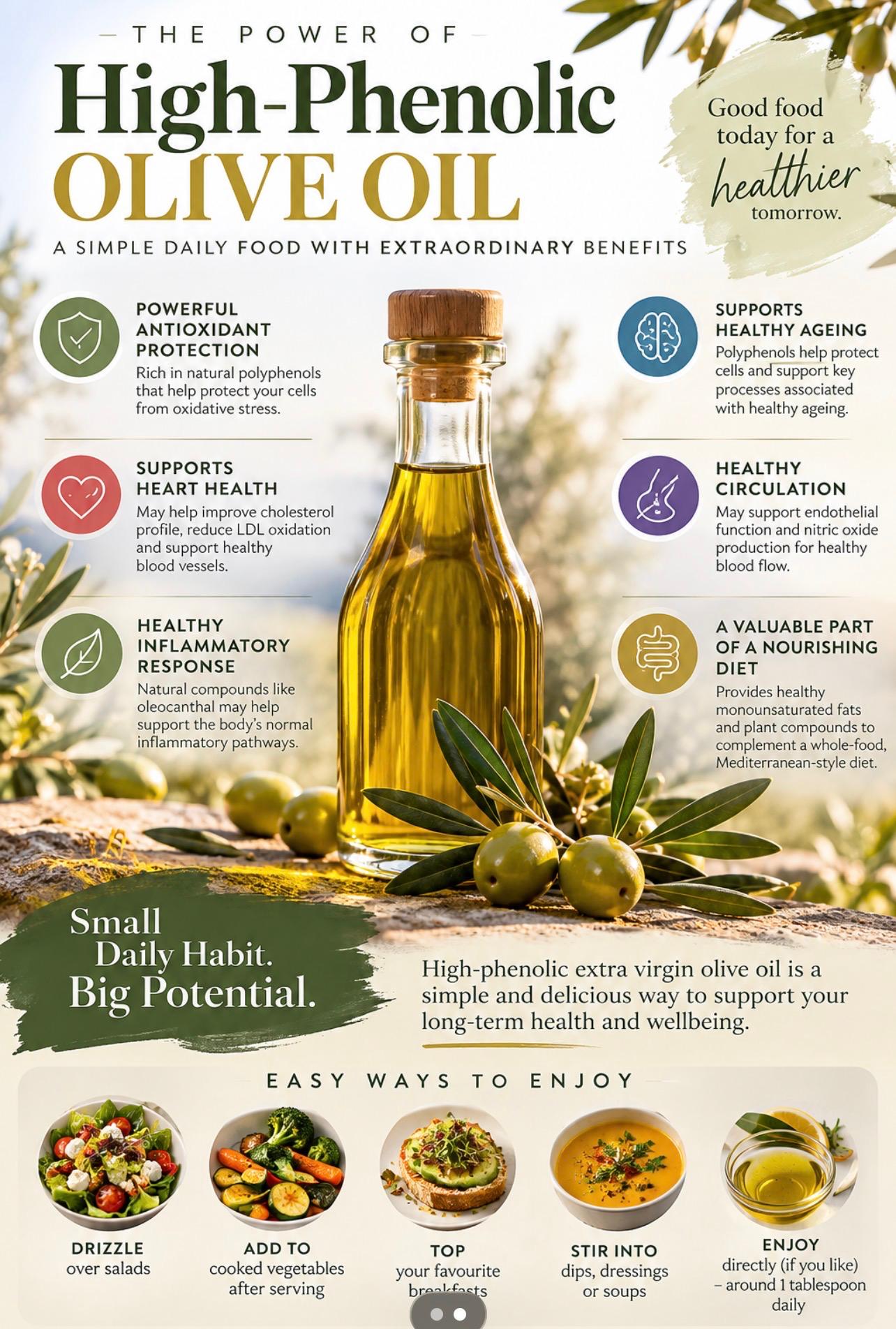
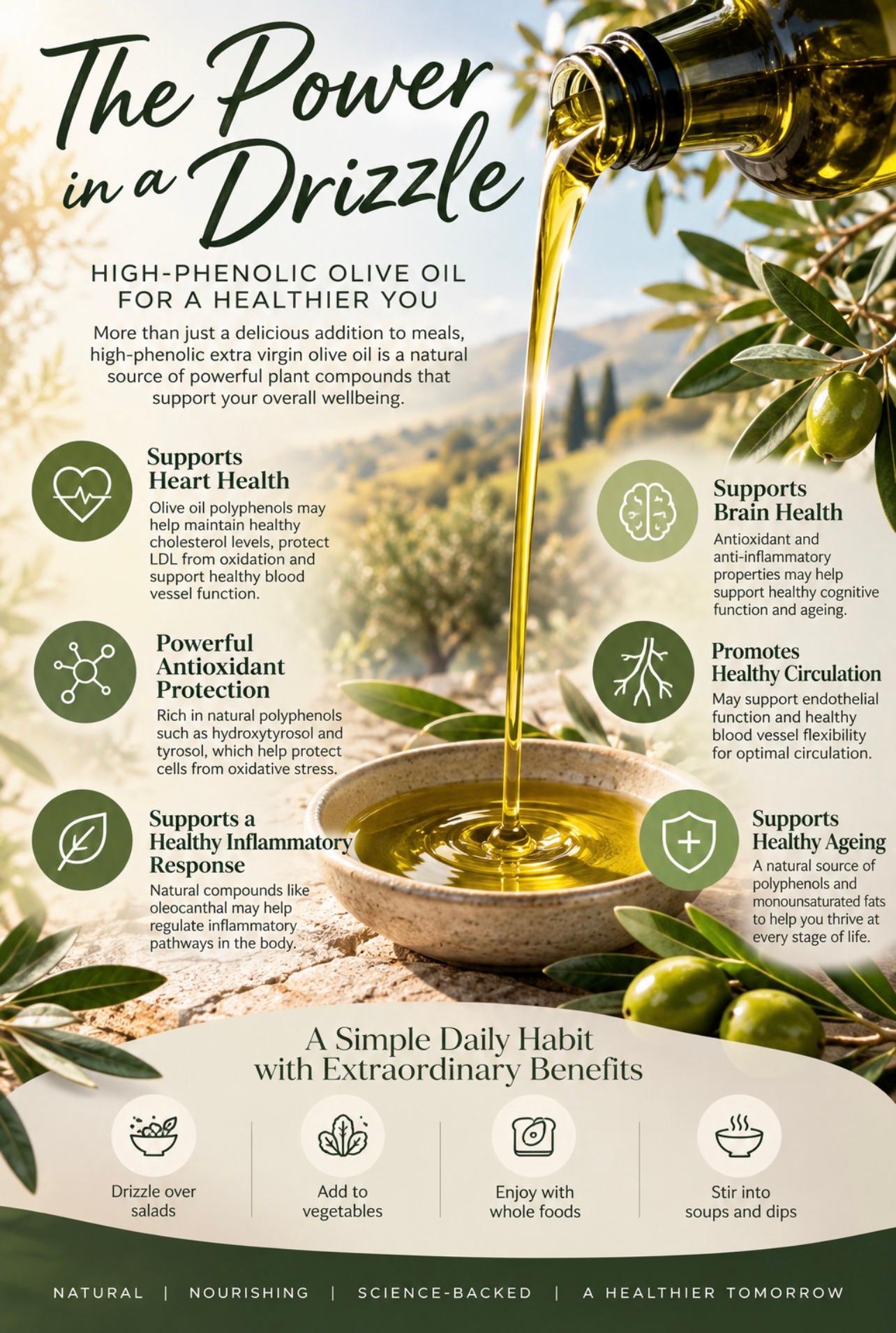
1. Powerful Antioxidant Protection
Every day our cells are exposed to oxidative stress.
Oxidative stress occurs when there is an imbalance between free radicals and the body’s antioxidant defences. Diets rich in antioxidant-containing plant foods can help support the body’s natural protective systems.
Olive oil polyphenols have antioxidant properties and have been studied particularly for their ability to help protect blood lipids from oxidative damage.
Clinical research comparing higher- and lower-polyphenol olive oils has found favourable effects on markers such as oxidised LDL and other indicators of oxidative stress. (PubMed)
Rather than thinking of antioxidants as a quick fix, it is better to view antioxidant-rich foods as part of a consistent, long-term whole-food lifestyle.
2. Supports Cardiovascular Health
One of the strongest areas of research surrounding extra virgin olive oil is heart and vascular health.
High-polyphenol olive oil has been investigated for its effects on:
- LDL oxidation
- HDL cholesterol
- Blood vessel function
- Blood pressure
- Inflammatory processes associated with cardiovascular disease
A systematic review and meta-analysis of clinical trials found that higher-polyphenol olive oils produced improvements in several cardiovascular risk markers compared with lower-polyphenol oils, including oxidised LDL, total cholesterol and HDL cholesterol. The researchers noted that longer-term studies are still needed. (PubMed)
More recent research also describes olive oil polyphenols as potentially supporting endothelial function — the healthy functioning of the cells lining our blood vessels. (PubMed)
This is one reason extra virgin olive oil is such an important component of the traditional Mediterranean dietary pattern.
3. Supports a Healthy Inflammatory Response
Inflammation is part of the body’s normal defence and healing process. Problems can arise, however, when inflammatory processes remain persistently elevated.
High-quality extra virgin olive oil contains several compounds being investigated for their role in helping regulate inflammatory pathways.
One of the most interesting is oleocanthal.
Research suggests that olive oil polyphenols can influence biological pathways associated with inflammation and oxidative stress. (PubMed Central (PMC))
This does not mean olive oil should be viewed as a treatment for inflammatory disease, but adding it to your diet can form part of an overall anti-inflammatory eating pattern rich in vegetables, herbs, spices, nuts, seeds, legumes and other minimally processed foods.
4. May Support Healthy Ageing
Healthy ageing is rarely about one “superfood.”
It is the result of many small, consistent lifestyle choices.
Movement, sleep, stress management, social connection and a nutrient-rich diet all matter.
Extra virgin olive oil fits beautifully into this picture because it provides predominantly monounsaturated fats together with naturally occurring plant compounds.
Researchers are continuing to investigate how olive oil polyphenols influence oxidative stress, vascular health, inflammation and other pathways associated with ageing. (PubMed)
The key word is consistency.
Adding nourishing foods regularly is generally more meaningful than chasing occasional health trends.
5. Supports Healthy Blood Vessels and Circulation
Healthy circulation depends partly on the endothelium — the delicate inner lining of our blood vessels.
Olive polyphenols appear to interact with signalling pathways involved in nitric oxide production and vascular function.
Nitric oxide helps blood vessels relax appropriately, supporting healthy circulation.
Recent scientific reviews describe extra virgin olive oil phenolics as potentially helping improve endothelial function and supporting cardiovascular health through several complementary mechanisms. (PubMed)
6. A Valuable Addition to an Anti-Inflammatory Diet
Nutrition works best when foods work together.
High-phenolic olive oil can be combined with foods such as leafy greens, colourful vegetables, tomatoes, avocado, herbs, nuts, seeds, legumes and whole foods rich in fibre and phytonutrients.
Rather than asking, “What single food will make me healthy?”, a more helpful question is:
What small nourishing choices can I make consistently?
A tablespoon of good-quality extra virgin olive oil alongside vegetables and other whole foods can become one of those simple daily habits.
What Makes a High-Quality High-Phenolic Olive Oil?
When choosing an olive oil for its phenolic content, look beyond attractive packaging.
Some useful things to consider include:
Verified polyphenol testing. Look for producers that provide independent laboratory measurements of phenolic content.
Harvest date. Freshness matters because phenolic compounds gradually decline during storage.
Early harvesting. Olives harvested earlier generally yield less oil but can contain higher concentrations of certain phenolic compounds.
Dark glass packaging. Light accelerates oxidation. Dark bottles help protect the oil.
Appropriate storage. Keep olive oil away from excessive heat, oxygen and direct sunlight.
Quartz Hill, for example, states that its Q600 oil is early-harvested, cold-pressed, stored in UV-protective dark glass and independently tested, with the product currently listing 647 mg/kg polyphenols. (Quartz Hill Olive Oil)
How Can You Include It in Your Day?
High-phenolic extra virgin olive oil can easily become part of your everyday routine.
Try:
- Drizzling it over salads
- Adding it to cooked vegetables after serving
- Using it over avocado or whole-food breakfasts
- Mixing it into dips and dressings
- Drizzling it over soups
- Pairing it with herbs and lemon
- Taking a small amount directly if you enjoy it that way
Quartz Hill suggests approximately one tablespoon daily for its Q600 product and describes it primarily as a daily-use oil rather than a cooking oil. (Quartz Hill Olive Oil)
There is no universal requirement that everyone take olive oil by the spoonful, however. It can simply be incorporated naturally into meals.
The Blooms Keen Health Perspective
Health is rarely created through one dramatic change.
It grows from the choices we repeat.
The food we eat. The environment we live in. The way we move. The way we rest. And the way we nourish our bodies every day.
High-phenolic extra virgin olive oil is not a miracle cure, but it is a beautiful example of how naturally occurring foods can provide compounds that support the body’s normal protective processes.
When used alongside a colourful whole-food diet and healthy lifestyle, high-quality extra virgin olive oil can become a simple and enjoyable part of supporting long-term wellbeing.
Simple food. Powerful plant compounds. A nourishing daily habit.
Blooms Keen Health — reconnect, restore, and thrive.
This article is for general educational purposes and is not intended to diagnose, treat, cure or prevent disease. If you have a medical condition, take medication or are making significant dietary changes, speak with an appropriately qualified healthcare professional.

